




How to Choose the Right Lumens?
Choosing the right lighting isn’t just about finding the brightest bulb. It’s about creating a comfortable, functional space while avoiding unnecessary electricity costs, harsh glare, and poorly lit areas.
Whether you’re upgrading your living room, choosing LED bulbs for your kitchen, illuminating your garage, or installing outdoor security lights, understanding lumens is the key to making the right decision.
What Are Lumens?
Lumens (lm) measure the total amount of visible light emitted by a light source. The higher the lumen rating, the more light the bulb produces.
For example:
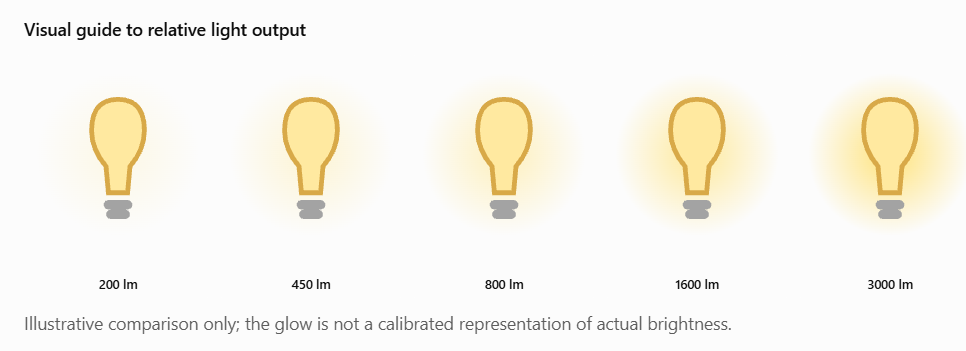
- 200 lumens: Soft accent lighting or a small nightlight.
- 450 lumens: Gentle lighting for a bedside lamp.
- 800 lumens: Standard household bulb brightness.
- 1,600 lumens: Bright household lighting.
- 3,000 lumens: Strong lighting for larger areas or fixtures.
- 5,000+ lumens: High-output lighting for garages, workshops, or outdoor spaces.
These descriptions are approximate because the perceived brightness also depends on how the light is distributed, the fixture, and the surrounding environment.
Lumens vs. watts: what’s the difference?
Many people still shop for light bulbs based on watts. However, wattage measures electricity consumption, not brightness.
| Measurement | What it tells you |
|---|---|
| Lumens (lm) | Total visible light output |
| Watts (W) | Amount of electrical power consumed |
| Lux (lx) | Light received per square meter |
| Kelvin (K) | Color appearance of the light |
| CRI | How accurately colors appear under the light |
For example, a modern LED bulb may produce approximately 800 lumens while consuming only 6–10 watts, compared with around 60 watts for a traditional incandescent bulb. ENERGY STAR+1
The golden rule: Choose lumens for brightness and compare watts for energy efficiency.
Lumens to Watts Conversion Chart
When replacing traditional incandescent bulbs, this comparison makes it easier to select an LED with a similar light output.
| Lumens | Incandescent equivalent | Typical LED watts |
|---|---|---|
| 450 lm | 40W | 4.5–7W |
| 800 lm | 60W | 6–11W |
| 1,100 lm | 75W | 9.5–14W |
| 1,600 lm | 100W | 11–18W |
| 2,600 lm | 150W | 25–28W |
Approximate values based on ENERGY STAR, U.S. Department of Energy, and LEDVANCE reference comparisons. Actual wattage varies by bulb design and efficiency. ENERGY STAR+2
LED efficiency can be compared using lumens per watt (lm/W). For example, an 800-lumen bulb consuming 8 watts produces 100 lm/W, while an 800-lumen bulb consuming 10 watts produces 80 lm/W. Both offer similar light output, but the first uses less electricity.
How Many Lumens Do You Need for Each Room?
The correct amount of light depends on room size, ceiling height, wall colors, natural daylight, and the activities performed there.
Here are practical starting ranges for residential lighting.
| Room | Suggested total lumens |
|---|---|
| Bedroom | 1,000–3,000 |
| Living room | 1,500–4,000 |
| Kitchen | 3,000–6,000 |
| Bathroom | 1,500–3,000 |
| Dining room | 1,500–3,000 |
| Home office | 2,000–4,000 |
| Hallway | 500–1,500 |
| Garage | 3,000–8,000+ |
These are broad planning estimates for typical-sized rooms, not fixed lighting standards. Larger spaces need proportionally more light, while task lights can supply additional illumination exactly where needed.
Living room lighting
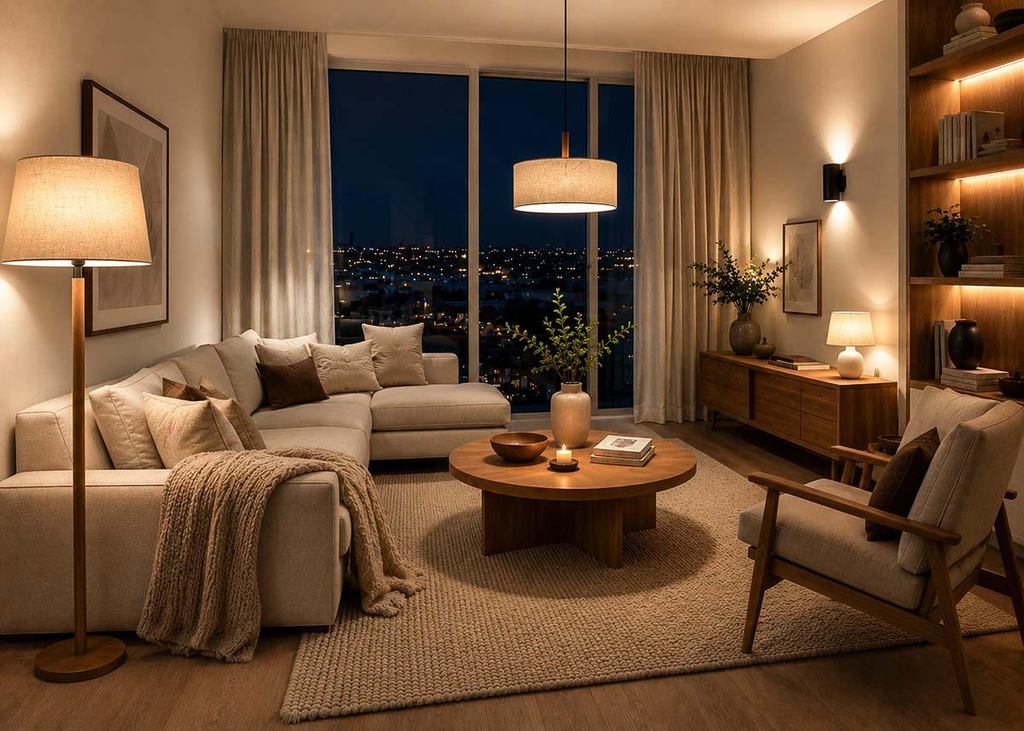
A living room benefits from several layers of lighting instead of one extremely bright fixture.
For an average living room, consider approximately 1,500–4,000 total lumens, divided among ceiling lights, table lamps, floor lamps, and accent fixtures.
Warm white bulbs between 2700K and 3000K generally create a relaxed atmosphere. Dimmable lights are particularly useful when the room serves several purposes.
Bedroom lighting

Bedrooms typically need softer lighting than kitchens and workspaces.
Around 1,000–3,000 total lumens can be a useful starting point, with lower light levels for relaxing and adjustable reading lamps for bedside tasks.
Avoid positioning powerful exposed bulbs directly in your line of sight when lying in bed.
Kitchen lighting
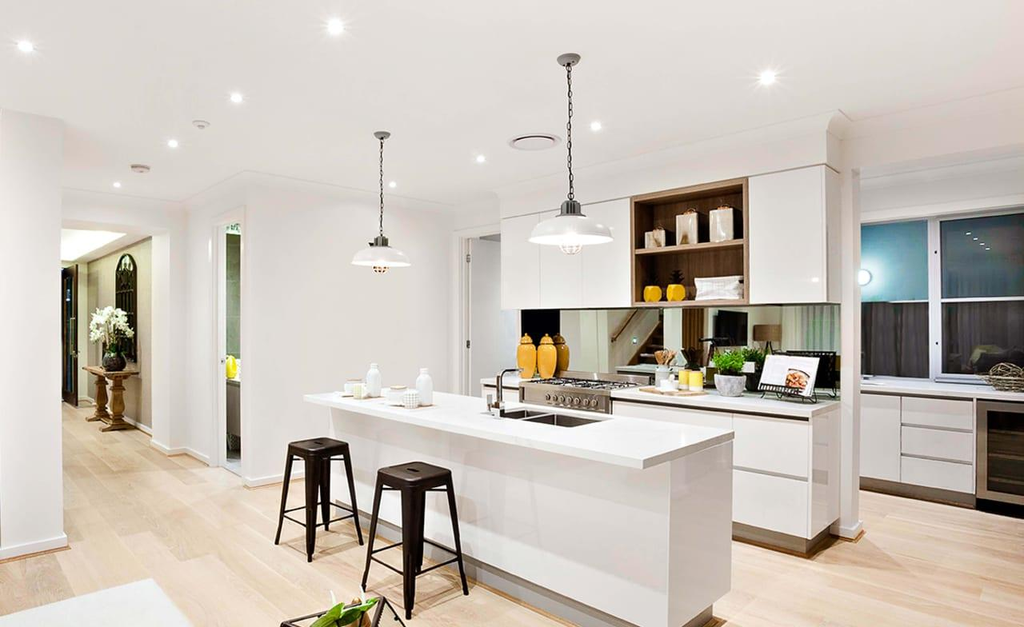
Kitchen lighting needs to support safe food preparation, cleaning, and cooking.
Start with general lighting and add focused light over countertops, sinks, and cooking areas.
The Energy Saving Trust lighting guide identifies approximately 150–200 lux for kitchen floor areas and around 400 lux at worktops, hobs, and sinks. Energy Saving Trust
For many typical kitchens, 3,000–6,000 lumens across multiple fixtures is a reasonable starting estimate, with adjustment for room size and installation.
Home office lighting
An office requires enough light for reading, writing, and computer work without excessive reflections or eye strain.
A common target for office work surfaces is about 300–500 lux. Use general room lighting together with an adjustable desk lamp, rather than trying to achieve every task-lighting requirement using a single ceiling fixture. LEDVANCE
Neutral white lighting around 3500K–4000K is a good starting option for many workspaces.
How to Calculate the Right Number of Lumens
A more accurate method than using room-wide estimates is to calculate the light required from the room’s area and target illuminance.
The fundamental relationship is:

This gives the lumens reaching the surface under ideal conditions. To select fixtures, account for losses caused by light distribution, fixture efficiency, room surfaces, and installation height.
For a simple residential estimate, you can divide by a utilization factor such as 0.7, while recognizing that this is only an approximation.
5. Choosing the Right Color Temperature
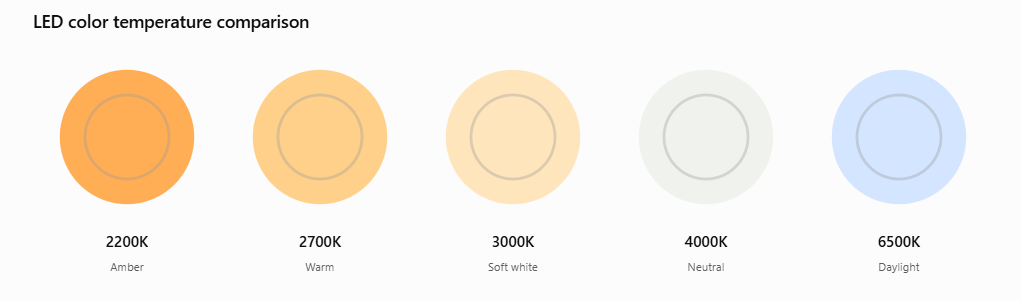
| Color temperature | Best applications |
|---|---|
| 2200K–2700K | Bedrooms, decorative lighting, relaxed environments |
| 2700K–3000K | Living rooms, dining rooms, general home lighting |
| 3500K–4000K | Kitchens, bathrooms, offices |
| 5000K–6500K | Workshops and applications where cooler daylight-like light is preferred |
A common mistake is believing that 6500K lighting automatically produces more lumens than 2700K lighting. Two bulbs can have the same lumen rating but different color temperatures.
How Many Lumens Are Best for Outdoor Lighting?
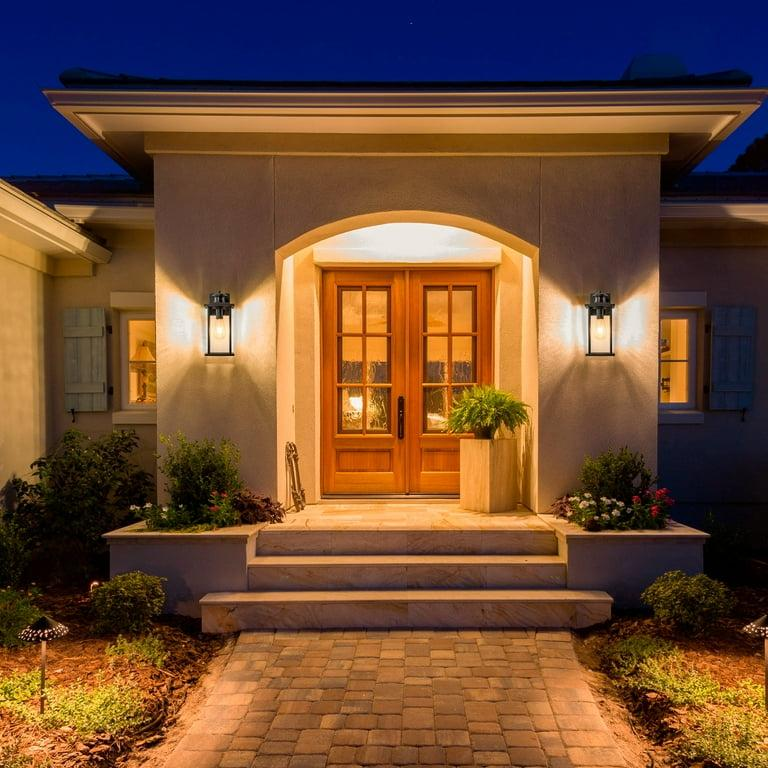
Outdoor lighting requires a different approach because beam direction, mounting height, safety, glare and light spill are especially important.
| Outdoor application | Approximate lumens per fixture |
|---|---|
| Decorative pathway light | 50–150 |
| Porch light | 300–800 |
| Garden accent lighting | 100–400 |
| Patio wall light | 300–800 |
| Driveway lighting | 700–2,000 |
| Motion-activated floodlight | 1,000–3,000+ |
| Large-area security lighting | Depends on site size and required coverage |
These are illustrative shopping ranges, not minimum safety or security requirements.
For residential outdoor lighting, prioritize shielded fixtures, warm color temperatures and controlled operation. DarkSky International recommends using light only where necessary, directing it toward the intended area, and keeping brightness as low as practical. DarkSky International
Bright, unshielded floodlights can create glare and dark shadows, sometimes making visibility worse rather than better.
Beam Angle: Why Lumens Alone Aren’t Enough
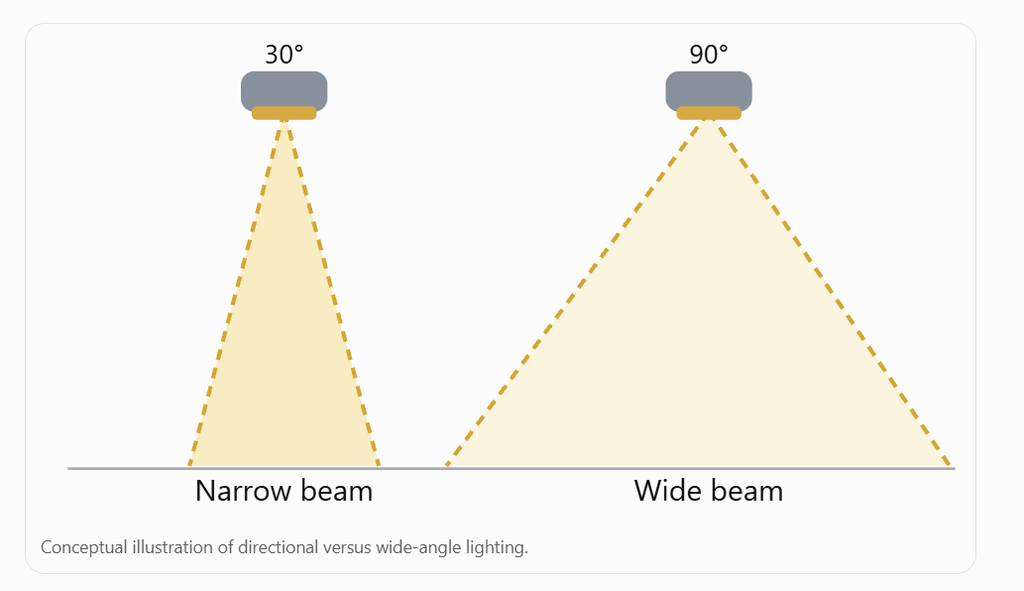
| Beam angle | Typical application |
|---|---|
| 10°–25° | Focused spotlighting and accent displays |
| 25°–40° | Artwork, counters, directional downlights |
| 40°–60° | General ceiling downlights |
| 60°–120° | Wide-area illumination and floodlights |
For general living room lighting, a broad distribution is often more comfortable. For highlighting artwork or a particular feature, a narrower beam may be more effective.
Other Important Features to Review Before Buying
Color Rendering Index (CRI)
CRI measures how faithfully a light source reproduces colors compared with a reference illuminant.
- CRI 80+: Suitable for many general household applications.
- CRI 90+: A strong choice for kitchens, bathrooms, makeup mirrors, artwork and detailed work.
The U.S. Department of Energy recommends at least CRI 80 for general interior lighting and identifies 90 or higher as excellent color fidelity. Department of Energy
Dimmability
Dimmable LEDs let you adjust the same lighting installation for working, entertaining or relaxing.
Before buying, confirm that both the bulb and dimmer switch are compatible. Not all LED bulbs support dimming, and incompatible equipment can produce flicker or inconsistent performance. Department of Energy
Fixture compatibility
Check the socket type, bulb dimensions, voltage, permitted wattage, and fixture design.
For enclosed fixtures, select LED bulbs specifically rated for enclosed use. Heat buildup can shorten the life of unsuitable bulbs. Department of Energy
Lifespan and durability
When comparing LEDs, look for rated operating life, warranty coverage, manufacturer reputation, and information about light-output maintenance.
A manufacturer’s lifetime rating does not necessarily mean the LED will completely fail at that number of hours. LED lifetime is often described in terms of the point at which output declines to 70% of its initial value. Department of Energy
LED Brightness Levels Reviewed
Rather than focusing on one brand, it’s useful to compare the most common LED brightness classes.
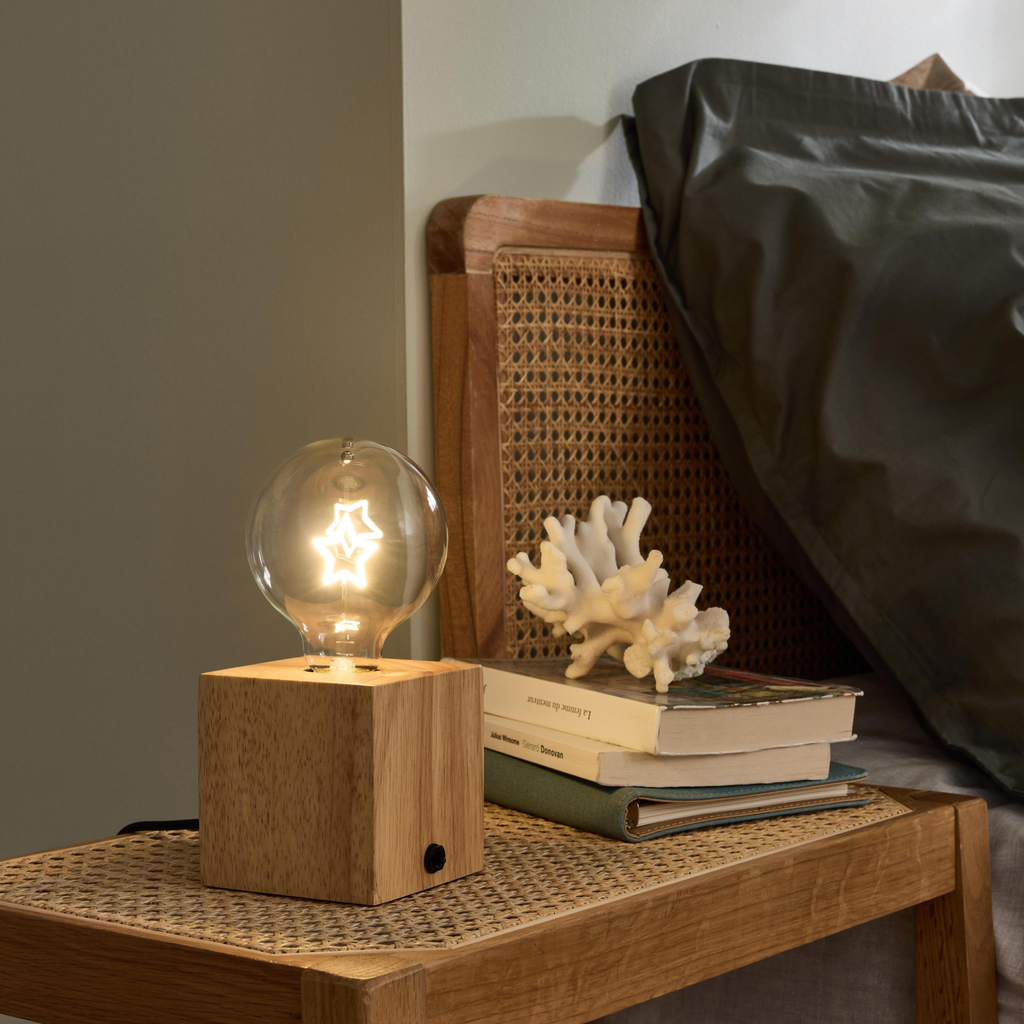
- 450 lumens — best for soft lighting
Ideal for bedside lamps, smaller table lamps, and decorative fixtures. Affordable to operate, but typically insufficient as the sole light source in a medium-sized room.
Verdict: Best for accent and supplemental lighting.
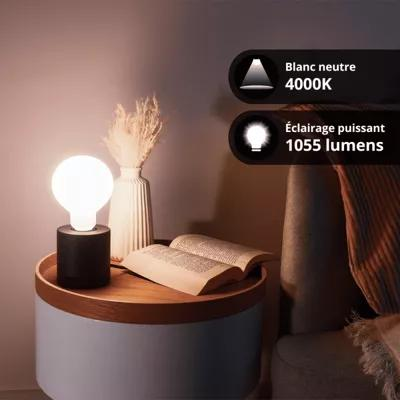
- 800 lumens — best everyday choice
Roughly equivalent to a traditional 60W incandescent bulb. This is a versatile brightness level for many lamps, ceiling fixtures and household applications.
Verdict: Best all-around starting point.
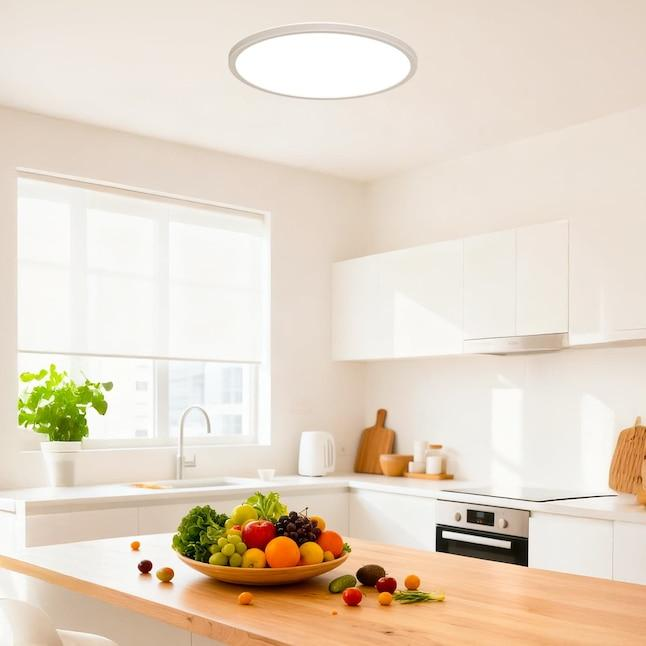
- 1,600 lumens — best for brighter spaces
Useful where stronger light is needed, including kitchens, utility rooms and work areas. Suitable fixtures or diffusers can help prevent glare.
Verdict: Best for high-output household lighting.
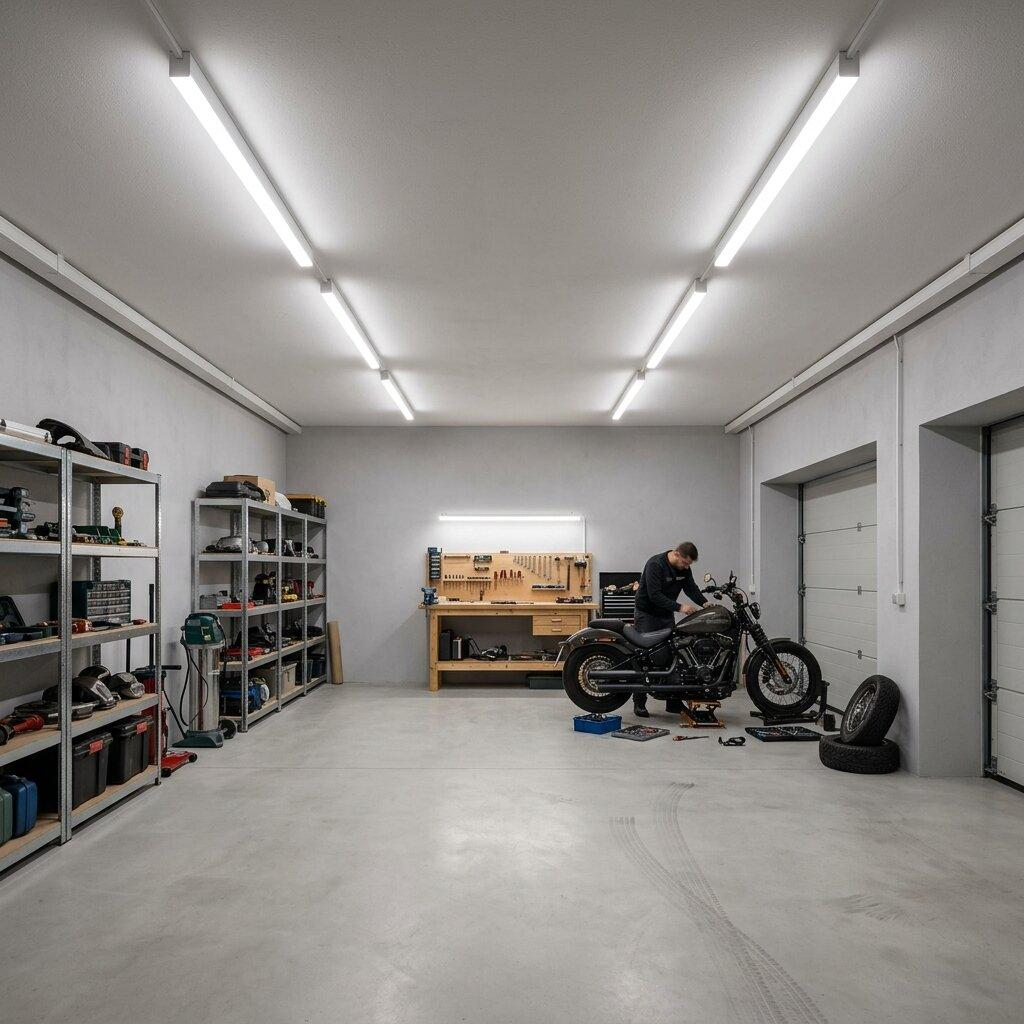
3,000–5,000+ lumens — best for large-area lighting
Suitable for appropriately designed garage lights, workshop fixtures and some outdoor applications. Output and distribution should match the mounting height and area covered.
Verdict: Best for specialized high-output fixtures.
Common Mistakes When Choosing Lumens
Even experienced homeowners make mistakes when buying lighting. The most common issues include:
- Buying based only on watts. Watts measure electricity usage, not light output.
- Assuming more lumens are always better. Excessive brightness can produce uncomfortable glare and waste energy.
- Ignoring color temperature. A cool-white bulb can feel inappropriate in a relaxing bedroom, even when its brightness is suitable.
- Using only one central fixture. Multiple lighting layers generally provide better flexibility and fewer dark corners.
- Overlooking beam angle. A narrow spotlight may leave much of the room poorly illuminated.
- Ignoring dimmer and fixture compatibility. LED bulbs must be suitable for the installation.
Final Verdict: What Lumens Should You Choose?
For most households, an 800-lumen LED bulb is an excellent starting point. It offers familiar brightness comparable to an old 60W incandescent bulb, and multiple units can be combined to light larger areas.
Quick buying recommendations
| Bedside or accent lighting | 250–450 lm |
| Everyday table lamp | 800 lm |
| Bright individual bulb | 1,100–1,600 lm |
| Garage or workshop fixture | 3,000–5,000+ lm |
Suggested starting ranges per light source or fixture, not requirements for an entire room.
The best lighting setup balances five considerations: brightness, electricity consumption, color temperature, beam distribution and fixture compatibility.
Before purchasing, check the bulb’s lumen rating, choose an appropriate Kelvin value, and calculate the approximate total light required for the space. When possible, favor quality LED lighting with a high CRI, good diffusion and dimming capability.
Bottom line: The right number of lumens isn’t the highest number on the package. It’s the amount of light that lets you use a space comfortably, efficiently and safely.
READ ALSO: What does e12 bulb mean?